
Categories
Boating, Things to doPublished August 6, 2026
Your Guide to Getting a Florida Boater Safety Card & Boating the Gulf Coast Like a Local

Written by Tracy Jones
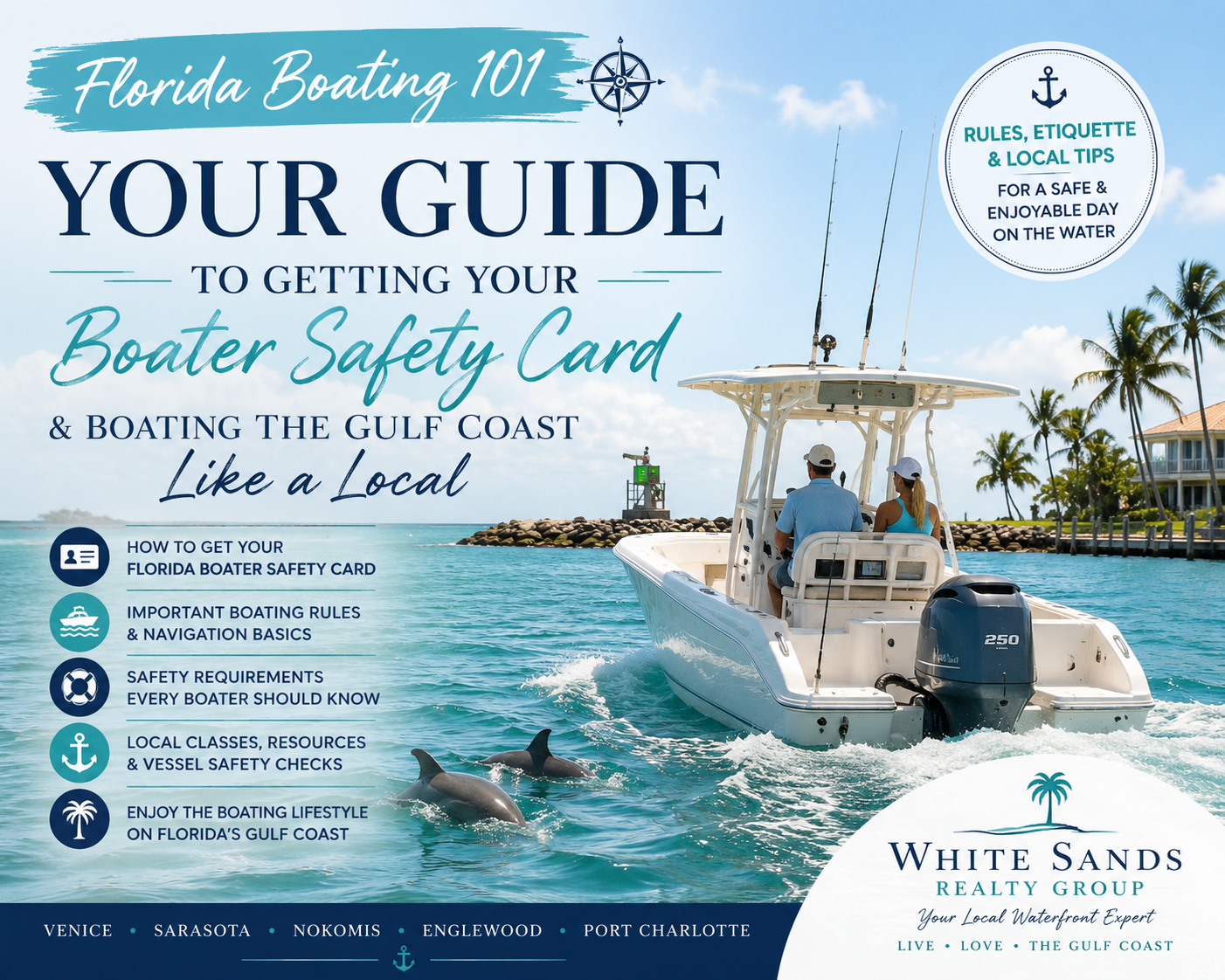
Your Guide to Getting a Florida Boater Safety Card & Boating the Gulf Coast Like a Local
One of the greatest joys of living on Florida's Gulf Coast is having endless opportunities to enjoy the water. Whether you're cruising the Intracoastal Waterway, fishing offshore, anchoring at a sandbar, or watching dolphins at sunset, boating is truly part of our lifestyle.If you're new to Florida or considering buying a waterfront home, one of the first questions many people ask is:
"Do I need a boating license?"
The answer may surprise you.
Florida Doesn't Have a Boating License...
Technically, Florida does not issue a traditional boating license.Instead, many boat operators are required to obtain a Florida Boating Safety Education Identification Card, often called a "boater safety card." Anyone born on or after January 1, 1988, who operates a motorboat with 10 horsepower or more must successfully complete a state-approved boating safety course and carry both the card and a photo ID while operating the vessel. The card never expires once issued.
How to Get Your Florida Boater Safety Card
Getting certified is easy and can usually be completed in just a few hours.The process includes:
- Completing an approved boating safety course (online or in person)
- Passing the course exam
- Receiving your temporary certificate
- Applying for your permanent Florida Boating Safety Education Identification Card
Local Boating Education Opportunities
If you prefer learning in person, our area has some outstanding organizations.One excellent resource is the US Coast Guard Auxiliary Flotilla 86 in Venice. Located near the Coast Guard facilities on Harbor Drive, they regularly offer boating safety education, vessel safety checks, and public boating classes taught by certified instructors.
If sailing interests you, the Sarasota Sailing Squadron offers sailing instruction for beginners through advanced sailors while providing one of the area's most welcoming boating communities.
For those wanting private, hands-on instruction after purchasing a boat, instructors such as Sarasota Boat Coach and Suncoast Boating Instruction provide personalized on-the-water training that helps new boat owners gain confidence docking, navigating channels, reading markers, and handling changing Gulf conditions.
Gulf Coast Boating Etiquette Every New Boater Should Know
Having the proper education is only part of becoming a safe boater. Longtime Gulf Coast residents appreciate courteous captains who respect others on the water.Slow Down Around Docks and Marinas
Always observe "Idle Speed" and "No Wake" zones.Large wakes can damage boats, seawalls, docks, kayaks, paddleboarders, and even cause injuries.
Respect Manatees
Southwest Florida is home to many manatees.Observe all posted slow-speed zones and never chase or feed wildlife.
Give Fishermen Plenty of Room
If someone is actively fishing, avoid running through their lines or creating unnecessary wakes.A little courtesy goes a long way.
Learn the Channel Markers
Remember the simple phrase:"Red Right Returning."
When returning from the Gulf toward the Intracoastal Waterway or inland, keep the red markers on your starboard (right) side.
Knowing your navigation markers is one of the most important boating skills.
Anchor Responsibly
When visiting sandbars or beaches around Venice, Nokomis, Sarasota, or Boca Grande:- Leave room for other boats.
- Keep music at a respectful volume.
- Don't anchor in marked channels.
- Retrieve all trash before leaving.
Watch the Weather
Summer afternoons on Florida's Gulf Coast often bring fast-moving thunderstorms.Check marine forecasts before leaving the dock, and remember that weather can change quickly even on beautiful mornings.
File a Float Plan
Before heading offshore, let someone know:- Where you're going
- Who is onboard
- When you expect to return
Essential Safety Equipment
Florida law requires certain safety equipment onboard depending on your vessel, including:- U.S. Coast Guard-approved life jackets for every passenger
- Throwable flotation device (for most larger boats)
- Fire extinguisher
- Sound-producing device (horn or whistle)
- Navigation lights
- Visual distress signals when required
Living the Florida Boating Lifestyle
One of the reasons so many people choose to call Venice, North Port, Nokomis, Englewood, Sarasota, and Port Charlotte home is the incredible boating lifestyle.Within minutes, you can enjoy:
- Cruising the Intracoastal Waterway
- Fishing the Gulf of Mexico
- Exploring hidden mangrove tunnels
- Visiting waterfront restaurants
- Watching dolphins play alongside your boat
- Enjoying spectacular Gulf Coast sunsets
Whether you're buying your first waterfront home, relocating to Florida, or simply dreaming about weekends on the water, learning safe boating practices will help you enjoy everything our beautiful Gulf Coast has to offer.
Written By Tracy Jones
REALTOR & Licensed Broker Associate
White Sands Realty Group
(941)376-3405
www.941.realestate
realtortracyjones@gmail.com

or another way
Request property marketing plan
You're one step away from getting a free marketing plan that shows how we'll sell your home for the most amount of money in the least amount of time - hassle free.