
Categories
Hurricanes, Buyer TipsPublished August 21, 2026
Hurricane Preparedness for New Florida Residents

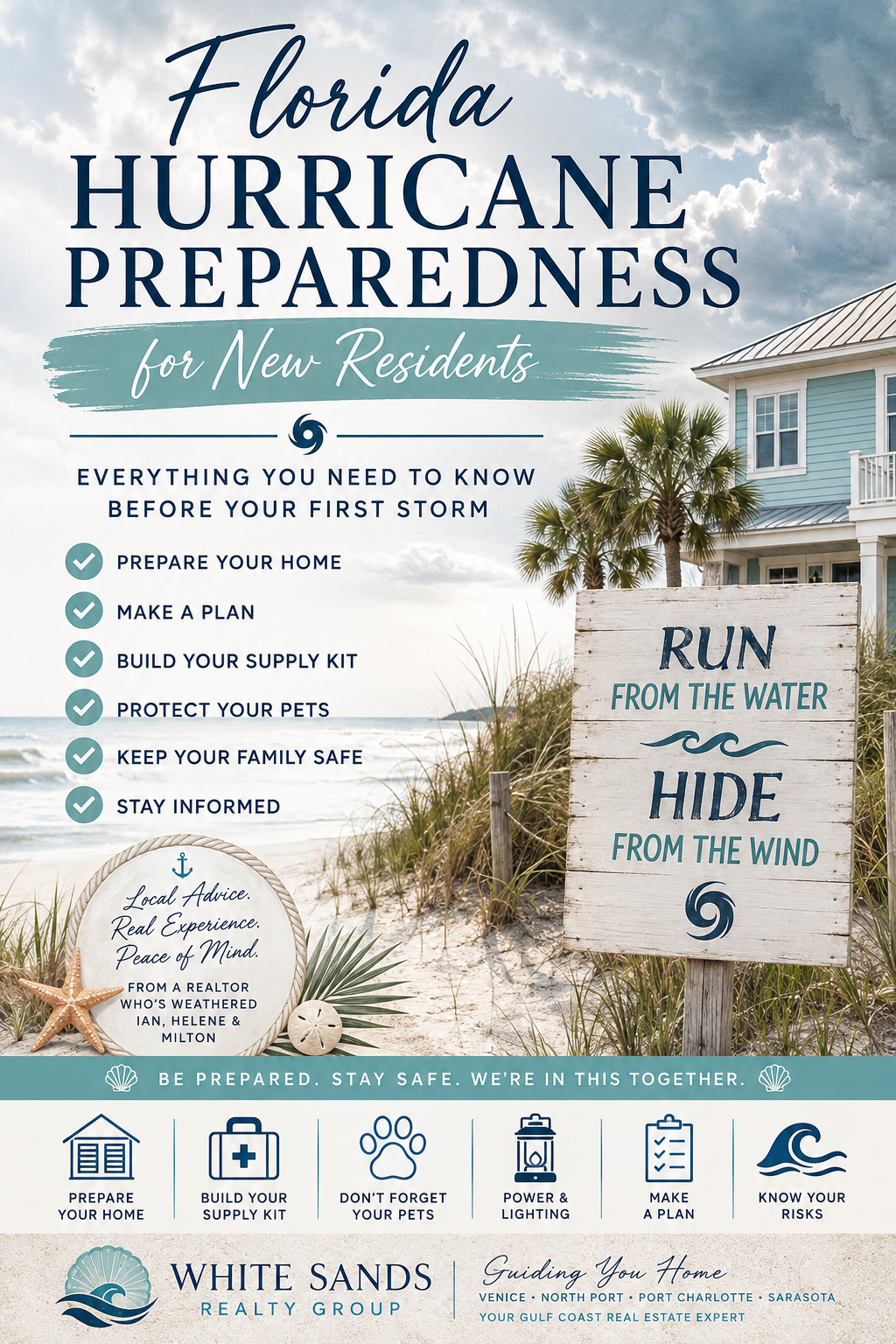
Hurricane Preparedness for New Florida Residents: A Local Realtor's Guide to Staying Safe
By Tracy Marie Jones, Broker Associate | White Sands Realty Group
Welcome to Florida! Whether you've moved here for the sunshine, beautiful beaches, boating, or the laid-back lifestyle, there's one part of living on the Gulf Coast that every new resident needs to understand: hurricane season.
As someone who relocated here from Indiana, I remember how intimidating my first hurricane season felt. Like many transplants, I wasn't sure what to buy, whether I should evacuate, or who to believe when every news station and social media feed seemed to say something different.
Now, after more than 20 years selling real estate along Florida's Gulf Coast and personally experiencing major storms—including Hurricanes Ian, Helene, and Milton—I can tell you that preparation is far more important than panic.
The goal isn't to be afraid of hurricanes. The goal is to be prepared so you can make calm, informed decisions when a storm approaches.
The Best Hurricane Advice You'll Ever Hear
There's an old saying that longtime Floridians live by:
"Run from the water. Hide from the wind."
It's simple, but incredibly important.
Storm surge and flooding are responsible for many hurricane-related fatalities. Wind can certainly damage homes, but rising water is often the greatest danger.
If local officials issue a mandatory evacuation because of storm surge or flooding, don't debate it—leave. You can rebuild a home. You cannot replace a life.
If you live outside evacuation zones, are not in a flood-prone area, and your home is built to modern hurricane standards, local officials may recommend sheltering in place instead.
Every storm is different, so always follow guidance from emergency management officials—not rumors on social media.
Should You Stay or Should You Evacuate?
This is probably the question I hear most from people moving to Florida.
Here's the advice I share with my own clients:
- Know your evacuation zone before hurricane season begins.
- Learn whether your property is located in a flood zone.
- Listen to Sarasota County, Charlotte County, NOAA, and the National Hurricane Center for official updates.
- If you're unsure, ask your neighbors. Floridians are incredibly helpful, and most have years of experience riding out storms.
- Don't make decisions based solely on dramatic social media posts. Fear spreads much faster than facts.
When in doubt, trust local emergency officials over internet opinions.
Prepare Before Hurricane Season Begins
The best time to prepare is when the weather is beautiful—not when everyone else is emptying store shelves.
Around Your Home
- Bring in patio furniture, potted plants, grills, umbrellas, bird feeders, wind chimes, and outdoor decorations.
- Trim dead or weak tree branches.
- Clean gutters and storm drains.
- Install hurricane shutters if your home has them.
- Review your homeowners and flood insurance coverage.
- Photograph your home and valuables for insurance purposes.
- Fill your vehicle's gas tank several days before the storm.
- Keep some cash available in case ATMs or credit card systems are offline.
Essential Hurricane Supply Checklist
Plan for at least 5–7 days without power.
Food & Water
- One gallon of drinking water per person, per day
- Extra water for pets
- Non-perishable food
- Canned goods
- Peanut butter
- Protein bars
- Crackers
- Shelf-stable milk
- Manual can opener
- Cooler and ice
Power & Lighting
- Flashlights
- Headlamps
- Rechargeable lanterns
- Rechargeable fans
- Portable power stations
- Power banks
- Phone charging cables
- Extra batteries
- Solar chargers if available
Health & Personal Care
- Prescription medications (at least one week's supply)
- First aid kit
- Toilet paper
- Paper towels
- Hand sanitizer
- Wet wipes
- Baby wipes
- Dry shampoo
- Deodorant wipes
- Toothbrush and toothpaste
- Feminine hygiene products
- Trash bags
- Zip-top bags
- Bug spray
- Sunscreen
- Work gloves
Important Documents
Keep copies in a waterproof container or digitally backed up:
- Driver's license
- Passport
- Insurance policies
- Medical information
- Home ownership documents
- Emergency contacts
Don't Forget Your Pets
Our pets experience hurricanes right alongside us.
Make sure you have:
- Pet food
- Bottled water
- Medications
- Leashes
- Harnesses
- Crates or carriers
- Vaccination records
- Favorite toys
- Blankets
- Puppy pads (especially if they can't safely go outside during the storm)
Keeping Kids Occupied Without Electricity
Power outages can last several days after a major hurricane.
Have a "storm basket" ready with:
- Playing cards
- Board games
- Coloring books
- Crayons
- Puzzle books
- LEGO sets
- Crafts
- Books
- Journals
- Downloaded movies on tablets
- Portable battery packs
- Favorite comfort snacks
Sometimes making the experience feel like a family camping trip helps reduce anxiety for children.
Small Things That Make a Big Difference
These are the tips longtime Floridians often don't think to mention:
- Fill your bathtub with water before the storm. This water can be used to flush toilets if water service is interrupted.
- Freeze bottles of water before the storm. They'll help keep your freezer cold longer and provide cold drinking water as they thaw.
- Set your refrigerator and freezer to their coldest settings before the storm arrives.
- Charge every rechargeable device you own—including fans, lanterns, battery packs, laptops, and rechargeable flashlights.
- Do laundry before the storm.
- Wash dishes before the power goes out.
- Download maps in case cell service becomes unreliable.
- Keep your vehicles fueled.
- Fill prescriptions early.
- Make ice several days in advance.
- Keep your coffee supplies stocked—you'll appreciate that first cup after the storm!
After the Storm
Even after the skies clear, hazards remain.
- Never drive through flooded roads.
- Stay away from downed power lines.
- Wear gloves and closed-toe shoes while cleaning up.
- Watch for broken glass, nails, and debris.
- Avoid floodwater, which can contain bacteria, sewage, chemicals, sharp debris, snakes, and floating colonies of fire ants.
- Take photographs before beginning cleanup for insurance purposes.
- Be extremely careful when using chainsaws or generators.
If using a portable generator, always operate it outdoors and well away from windows and doors to prevent carbon monoxide poisoning.
Final Thoughts
Living in Florida is an incredible experience, and hurricanes are simply part of life on the Gulf Coast. The good news is that modern forecasting has improved tremendously, giving us time to prepare.
After experiencing Hurricanes Ian, Helene, and Milton, I've learned that preparation brings peace of mind. Having a plan, trusting reliable information, and staying connected with your local community makes all the difference.
As someone who has helped hundreds of families relocate to Florida, I want every new resident to feel confident—not fearful—about hurricane season.
Prepare early. Stay informed. Trust official guidance. Lean on your neighbors.
And always remember:
Run from the water. Hide from the wind.
If you're considering buying or selling a home in Venice, North Port, Port Charlotte, or anywhere along Florida's Gulf Coast, I'd be honored to help you navigate not only the real estate process, but also what it means to truly feel at home here.
Tracy Jones
Broker Associate | White Sands Realty Group
Serving Venice, North Port, Port Charlotte, Sarasota, and Florida's Gulf Coast
(941)376-3405
www.941.realestate
realtortracyjones@gmail.com

Michael Burke
| White Sands Realty Group Florida
or another way