
Categories
Beaches, Buyer Tips, Waterfront Real Estate, BoatingPublished August 6, 2026
Buying Waterfront Real Estate in Florida: What Every Buyer Needs to Know

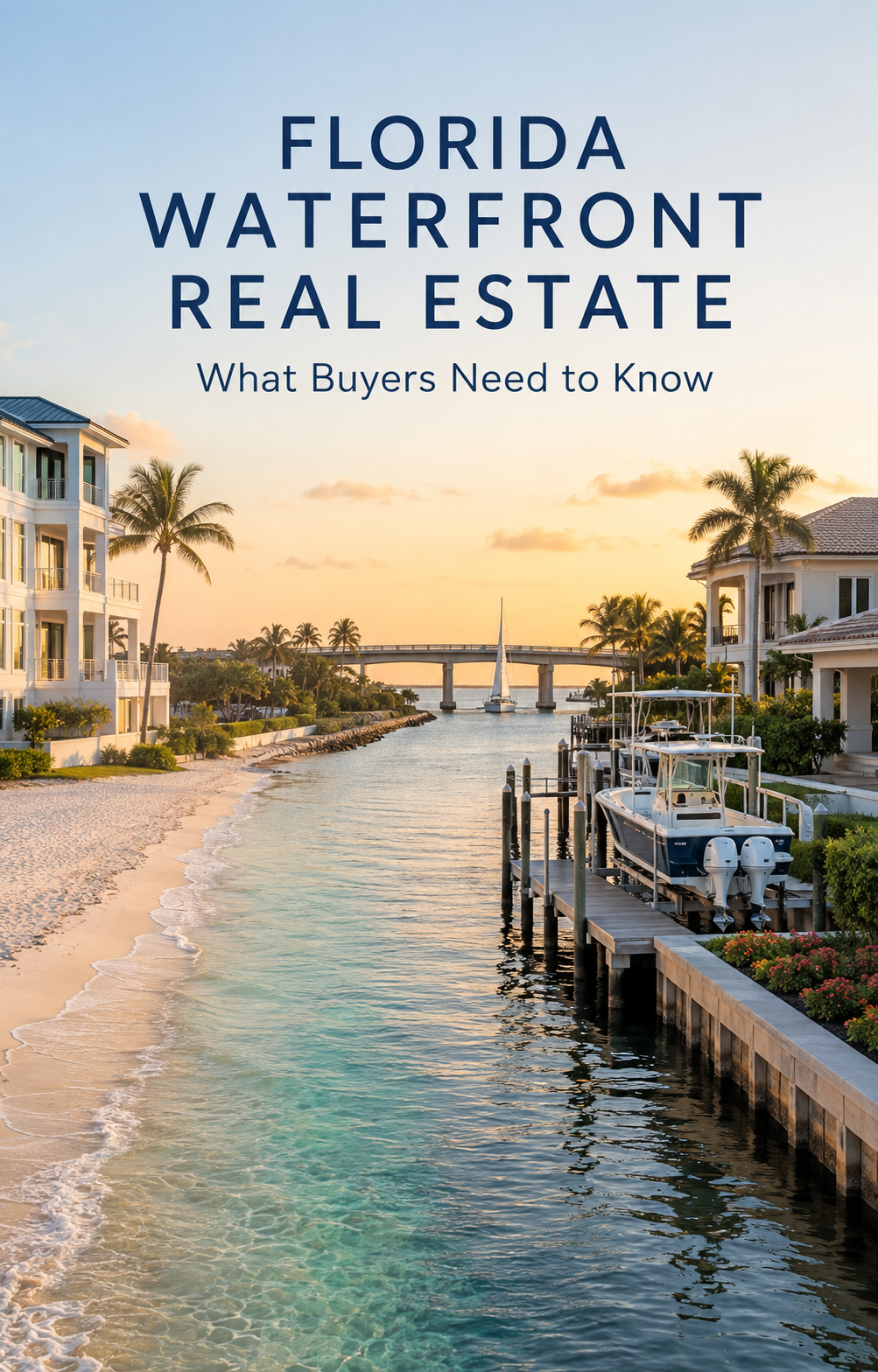
Buying Waterfront Real Estate in Florida: What Every Buyer Needs to Know
When buyers tell me they want a waterfront home in Florida, my first question is always:
What do you want your waterfront lifestyle to look like?
Do you imagine walking out your door and onto the beach, watching the sun set over the Gulf? Or do you want to keep a boat behind your home and spend your weekends fishing, cruising, and island hopping?
Both lifestyles are wonderful, but they require very different types of properties.
In Florida, the word “waterfront” can describe everything from a Gulf-front condominium to a home on a freshwater canal with no boating access to the Gulf. Before beginning your search, it is important to understand the differences and identify what matters most to you.
Gulf-Front Living Versus Boating Access
If your dream is to step outside and walk directly onto the sand, you are probably looking for a Gulf-front property. Gulf-front homes and condominiums offer spectacular views, beautiful sunsets, and direct access to the beach.
However, Gulf-front properties generally do not provide private boat docks. The Gulf’s waves, tides, wind, erosion, and environmental protections make private residential docks impractical in most Gulf-front locations.
Buyers who want to keep a boat at home will usually find docks along:
- Bays
- Canals
- Rivers
- Harbors
- The Intracoastal Waterway
- Protected coastal waterways
Occasionally, a property offers the best of both worlds. On narrow barrier islands such as Casey Key and Manasota Key, certain properties stretch from the Gulf to the bay. These are often referred to as Gulf-to-bay or beach-to-bay properties. Depending on the property, an owner may have beach access on one side and protected water with boating access on the other.
These properties are special, and typically priced accordingly.
Not Every Canal Provides Gulf Access
One of the biggest misconceptions buyers have is that every Florida canal leads to the Gulf.
Some canals are freshwater interior canals that are wonderful for kayaking, paddle boarding, fishing, wildlife watching, and enjoying a peaceful water view, but they may have no navigable connection to the Gulf.
Other properties are located on saltwater canals with Gulf access, but the route may take considerable time. A home may technically offer Gulf access while requiring an hour or more of idling through canals and no-wake zones before reaching open water.
That may be perfectly acceptable for one buyer and frustrating for another.
When evaluating a Gulf-access property, ask:
- How long does it realistically take to reach open water?
- How much of the route is within a no-wake zone?
- Are there locks, bridges, narrow passages, or other restrictions?
- Is the route comfortable and practical for the type of boating I plan to do?
- How will the travel time feel with children, guests, pets, or older passengers aboard?
- Does the boat have a head and the amenities needed for a longer trip?
Homes offering faster and easier access to the Gulf are generally more desirable and often more expensive than similar homes farther inland.
Whenever possible, experience the route by boat. Looking at a map does not always tell you what the trip will actually feel like.
Bridges Can Determine Whether a Property Works for Your Boat
Bridges are an essential consideration, particularly for buyers with sailboats, yachts, towers, T-tops, or other tall vessels.
A fixed bridge may prevent your boat from reaching the Gulf altogether. Even when a bridge appears high enough, you need to know its vertical clearance and understand how tides and water levels can affect the available space.
Drawbridges introduce different considerations. You may need to account for bridge-opening schedules, restricted opening times, seasonal traffic, or lengthy delays.
Before purchasing, verify:
- The height of every bridge along the route
- Whether the bridges are fixed or operable
- The clearance required by your boat
- Any bridge-opening schedules
- Whether tides or changing water levels affect clearance
Never assume that because other boats are present in the neighborhood, your boat will fit. Their height, draft, and route may be very different from yours.
Consider the Boat You May Own Next
A buyer should not evaluate a property solely around the boat they own today.
I like to ask:
What boat do you own now, and what boat do you realistically expect to own next?
If you are considering a larger boat in the future, make sure the canal, bridges, dock, lift, water depth, and turning radius will accommodate it. Otherwise, you may outgrow the property sooner than expected.
Water Depth and Tidal Conditions Matter
A canal can look deep from the shoreline while being too shallow for a particular boat.
Buyers should investigate the controlling depth along the entire route, not only the depth beside the dock. The boat’s draft must be considered, along with seasonal changes, sediment buildup, and high and low tides.
A shallow canal may only be navigable during higher tides. That can mean planning your departure and return around the tide rather than your preferred schedule.
Ask:
- What is the approximate depth at the dock?
- What is the shallowest point between the property and open water?
- How does the depth change at low tide?
- Is dredging performed, and who is responsible for it?
- Has the current owner experienced difficulty entering or leaving?
- Can the buyer’s boat safely navigate the route throughout the year?
Water-depth information should be independently verified whenever it is important to the purchase.
Canal Width, Turning Space, Current, and Wake
The width and shape of a canal can affect how easily you can maneuver your boat.
Consider whether there is enough room to turn, approach the dock, and position the boat on the lift, especially when wind or current is working against you. Neighboring boats and docks may further reduce the available space.
Also consider exposure to wakes and strong currents. A property along a busy boating route may offer fast access to open water, but frequent wakes can create additional movement and wear on boats, docks, lifts, and seawalls.
The ideal location depends on whether you value quiet, protected water or quick access to the Gulf.
Inspect the Seawall Carefully
The seawall is one of the most important—and potentially costly, components of a waterfront property.
A standard home inspection may not provide a complete evaluation of the seawall. A qualified waterfront or marine contractor should examine it for:
- Cracking
- Leaning or bowing
- Corrosion
- Failed tiebacks
- Soil erosion
- Gaps or separation
- Sinkholes or depressions behind the wall
- Evidence of water washing soil away
Buyers should also determine the seawall’s approximate age, maintenance history, remaining useful life, and whether neighboring seawalls could affect the property.
A beautiful house can become a very expensive purchase if a major seawall replacement was not anticipated.
Evaluate the Dock and Boat Lift
A dock and lift should be evaluated for both condition and suitability.
Confirm:
- The dimensions and condition of the dock
- The lift’s weight capacity
- Whether the lift fits the boat’s length, beam, and hull design
- The condition of pilings, cables, motors, bunks, and electrical components
- Whether water and electricity are available at the dock
- Whether the dock has adequate lighting and safe access
- Whether improvements were properly permitted
A lift designed for a smaller boat may not safely accommodate a larger or heavier vessel. Buyers should obtain documentation when available and have the equipment professionally inspected.
Verify Waterfront Permits
Never assume an improvement is legal simply because it already exists.
Seawalls, docks, lifts, davits, boathouses, decks, electrical systems, and other waterfront improvements may require permits from local, state, or federal authorities.
Buyers should verify that existing structures were properly permitted and determine what will be allowed if they want to replace, expand, or modify them later.
Environmental protections may limit the size, design, lighting, placement, or construction of waterfront improvements. What a neighbor was permitted to build years ago may not necessarily be approved today.
Understand Mangroves and Environmental Protections
Mangroves are an important part of Florida’s coastal environment and are protected. A buyer should never assume mangroves can simply be cut down or removed to improve a view.
Seagrass beds, wetlands, manatee zones, sea turtle protections, and other environmental considerations may also affect:
- Dock placement
- Boat operation
- Exterior lighting
- Landscaping
- Shoreline modifications
- Future construction
If a buyer plans to change the shoreline or add waterfront improvements, those plans should be investigated during the inspection and due-diligence period.
Investigate Water Quality
Water conditions can vary significantly from one location to another and throughout the year.
Buyers should ask about:
- Red tide
- Algae
- Fish kills
- Odors
- Floating vegetation
- Storm debris
- Canal flushing
- Stagnant water
- Seasonal water-quality changes
Some canals flush more effectively with the tides than others. A canal that appears beautiful during one showing may behave differently during hotter months, after heavy rain, or during certain tidal conditions.
Visit the property more than once and, if possible, at different times of day and tide levels.
Flood Zones, Elevation, and Insurance
Waterfront buyers should closely evaluate flood exposure and insurance costs before making a final commitment.
Review:
- The property’s flood zone
- The elevation certificate, if available
- The home’s finished-floor elevation
- The base flood elevation
- Prior flooding or water intrusion
- Drainage around the property
- Flood vents and other mitigation features
- The cost and availability of flood, wind, and homeowners insurance
Two homes on the same street can have very different elevations, construction features, and insurance costs.
Obtain insurance quotes during the inspection period—not after it expires. The age and condition of the roof, electrical system, plumbing, windows, doors, and other components can materially affect coverage and affordability.
Plan for Hurricanes and Severe Weather
Living near the water requires a storm plan for both the home and the boat.
Consider:
- Impact-rated windows and doors
- Hurricane shutters
- Roof condition and roof-to-wall connections
- Drainage
- Generator capability
- Safe storage for outdoor furniture
- Boat evacuation or securing procedures
- Marina or dry-storage availability
- Access to the property after a storm
Buyers should understand what will happen to the boat when a named storm approaches. Leaving that decision until the last minute can create unnecessary risk and stress.
Account for Saltwater Maintenance
Salt air is beautiful, but it is hard on property.
It can accelerate corrosion and deterioration of:
- Air-conditioning equipment
- Railings
- Fasteners
- Electrical components
- Outdoor kitchens
- Appliances
- Windows and doors
- Vehicles
- Docks and boat lifts
Waterfront homeowners should expect more frequent cleaning, maintenance, inspections, and replacement of certain exterior components. That additional maintenance should be considered when establishing an ownership budget.
Gulf-Front Buyers Should Consider Erosion and Beach Access
For Gulf-front and beachfront properties, investigate erosion history, dune protections, shoreline changes, and beach-renourishment projects.
Buyers should also distinguish between a beach view and actual beach access.
A property may offer a beautiful Gulf view but lack direct or deeded access to the beach. Beach access may be private, public, shared, deeded, or available only through an easement.
Verify exactly what rights are included with the property and whether any beach-restoration projects or special assessments may affect ownership.
Research Marinas and Boating Services
Even buyers with private docks should look at nearby boating resources.
Consider the location of:
- Marinas
- Fuel docks
- Boat ramps
- Dry storage
- Repair facilities
- Pump-out stations
- Bait and tackle shops
- Restaurants with boat access
- Emergency marine services
For some buyers, a non-waterfront home close to a marina may offer a more practical and affordable lifestyle than maintaining a seawall, dock, and lift at home.
Understand Rental and Community Restrictions
If rental income is part of the plan, research the applicable municipal, condominium, and homeowners association rules.
Confirm:
- Minimum rental periods
- Rental frequency
- Licensing requirements
- Occupancy limits
- Parking restrictions
- Boat and trailer rules
- Dock-use restrictions
- Pet policies
- Guest access
Buyers should also investigate whether there are restrictions on boat size, dock modifications, exterior lighting, generators, or storing trailers and recreational equipment.
Protect the View You Are Buying
A waterfront view can be a major part of a property’s value, but that view may not be permanently protected.
Investigate what can legally be built on neighboring properties and whether future construction, vegetation growth, docks, lifts, or redevelopment could affect the view.
You should also verify the property boundaries and understand any easements, shared docks, submerged-land leases, or riparian rights associated with the property.
Think About the Entire Waterfront Lifestyle
The right waterfront property is not determined by the view alone. It should support the life you want to live.
Before beginning your search, decide which experiences matter most:
- Walking directly onto the beach
- Watching Gulf sunsets
- Keeping a boat behind the home
- Fishing
- Kayaking or paddleboarding
- Island hopping
- Having quick access to open water
- Enjoying a peaceful water view
- Generating rental income
- Living close to restaurants, marinas, and cultural amenities
- Having privacy and protection from boat traffic
Once those priorities are clear, it becomes much easier to identify the right type of waterfront property.
Work With Someone Who Understands the Differences
Terms such as waterfront, Gulf access, sailboat water, no-bridge access, canal-front, bayfront, Intracoastal, beach-to-bay, and Gulf-front are not interchangeable.
Each describes a different lifestyle, level of access, set of maintenance responsibilities, and price point.
A knowledgeable real estate professional will not simply search for homes with “waterfront” checked in the listing criteria. The right professional will ask about your boat, your preferred activities, your comfort with maintenance, your desired travel time to open water, and your long-term plans.
Waterfront living in Southwest Florida can be extraordinary, but buying the right property requires asking the right questions before you fall in love with the view.
If you are considering a waterfront home in Venice, North Port, Port Charlotte, or the surrounding Gulf Coast communities, I would be happy to help you evaluate the options and find a property that truly fits your lifestyle.
Water depths, navigability, bridge clearance, flood information, insurance availability, permitting, environmental restrictions, rental regulations, and waterfront rights should always be independently verified with the appropriate professionals and governmental authorities.
Written By Tracy Jones
Broker Associate
(941)376-3405
www.941.realestate
realtortracyjones@gmail.com

Michael Burke
| White Sands Realty Group Florida
or another way